Project · Aug 2025
Distributed Web Crawler and Search Engine
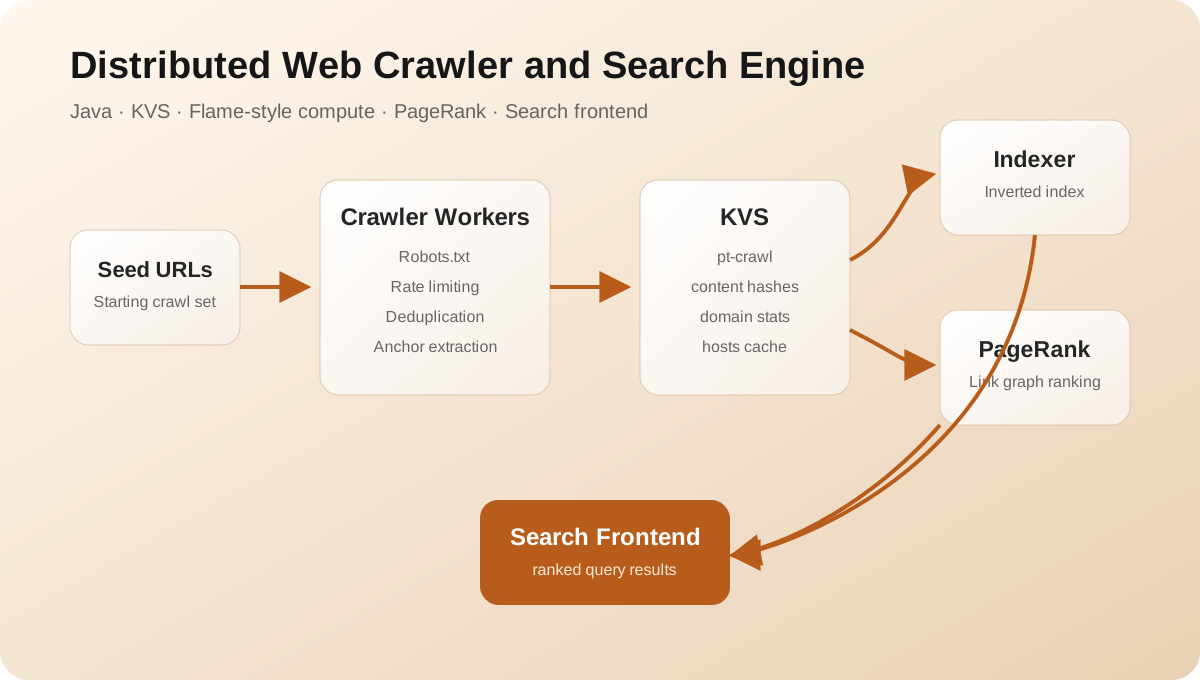
This project implements a distributed web search engine from the ground up. The system combines a custom Java web server, distributed key-value storage, a Flame-style compute layer, crawler jobs, an inverted indexer, PageRank, and a query frontend into one search pipeline.
Highlights
- Custom web server, KVS, crawler, indexer, PageRank, and search frontend
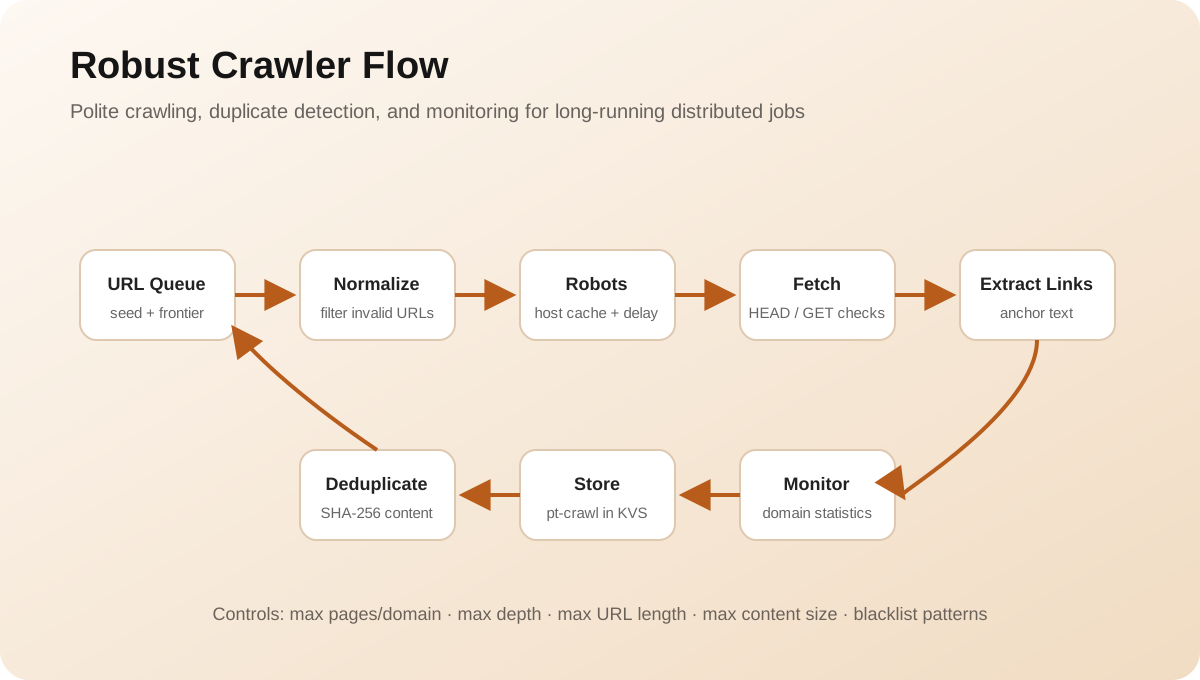
- Robots.txt handling, rate limiting, blacklist filtering, and URL normalization
- SHA-256 content deduplication, anchor text extraction, and spider-trap protection
Problem
Search engines require several systems to work together: crawling, storage, distributed computation, ranking, and query serving. I built this project to understand how those pieces fit together in a scalable architecture rather than relying on existing search libraries.
System Design
The system starts with seed URLs and uses Flame workers to crawl pages in parallel. Crawled content is stored in a distributed key-value store, then processed by indexing and PageRank jobs. A frontend service combines inverted-index matches with ranking signals to return search results.
- Custom HTTP server and frontend search interface
- Distributed KVS for crawled pages, host metadata, content hashes, and blacklist rules
- Flame-style distributed jobs for crawling, indexing, and PageRank
- PageRank-enhanced retrieval for ranked query results
Crawler Robustness
The crawler includes practical protections needed for real web crawling. It normalizes URLs, respects robots.txt constraints, limits per-domain crawl depth and volume, filters blacklisted patterns, deduplicates page content with SHA-256 hashes, and tracks domain-level statistics.
- Robots.txt and domain-level rate limiting
- Spider-trap protection through depth, URL length, and page-count limits
- Content-size checks to avoid oversized downloads
- Anchor text extraction for better downstream ranking signals
What I Learned
This project strengthened my understanding of distributed systems tradeoffs: batching vs. memory pressure, crawl politeness vs. throughput, fault tolerance in long-running jobs, and how ranking quality depends on both crawler quality and index design.